


SeeGen AI: Seedance 2.0 & 2.5
Fillog Studio
When an AI video app promises a familiar workflow for Seedance users, the real test is not the slogan. It is what happens when a project does not behave as expected: a generation takes longer than anticipated, a prompt produces an unwanted result, or a clip seems to fail before you can tell whether the problem is the app, the model, or your own setup. I spent time looking at SeeGen AI from that practical angle, and my impression is that it is best understood as a focused companion for people already interested in Seedance 2.0 and Seedance 2.5 rather than as a complete video-editing studio.
That distinction matters. SeeGen AI is listed in the Art & Design category, and its developer is Fillog Studio. The app is free to install, with optional purchases ranging from a few dollars to much higher per-item amounts, so I would approach it as an accessible starting point rather than assuming every part of an intensive workflow will remain free. Its current version is 1.1.6, and it is intended for devices running Android 7.0 or later.
Where the workflow usually gets stuck
The first point of friction is expectation. SeeGen AI is not simply a conventional timeline editor with an AI button added on top. Its purpose is tied to Seedance 2.0 and Seedance 2.5 workflows, so the quality of the experience depends heavily on how clearly you define the result before you begin. If you open it expecting to trim several clips, arrange a soundtrack, and finish a polished social video entirely inside one familiar editing workspace, you may find the app narrower than expected.
I found it more useful to think in terms of a request-and-review cycle. You describe the visual idea, inspect what comes back, then adjust the request instead of treating the first result as final. This sounds obvious, but it changes how you use the app. A vague prompt such as “make a cinematic city video” leaves too many creative decisions open. A more practical request identifies the subject, movement, framing, mood, and the detail that must stay consistent. That gives you a better basis for judging whether the output is actually wrong or simply different from what you imagined.
Another common sticking point is trying to correct too many things at once. If the subject, camera motion, lighting, and background all change between attempts, it becomes difficult to know which instruction helped. I recommend keeping the core description stable and changing one priority at a time. For example, first stabilize the subject and setting, then refine the camera movement. This is a more controlled workflow than rewriting the entire prompt after every disappointing result.
Related News

Why WhatsApp Messenger Still Makes Everyday Communication Feel Easy

Jurassic World: The Game Is the Better Dino Tycoon for Strategic Players

Threads in Real Life: Who Should Join, Lurk, or Leave

How SHEIN Turned Shopping Into an Endless Content Feed

How to Make Fortnite Feel Smarter on Mobile

Should You Switch to Microsoft Outlook on Mobile?
SeeGen AI is also not the right place for users who want instant certainty. AI video generation involves interpretation, and a result can follow the wording while still missing the visual intention. I would give the app a fair trial only if I were comfortable reviewing several variations and making deliberate adjustments. People looking for a fixed, predictable template system may be happier with a traditional editor or a design app built around manual controls.
What to check before blaming the app
Before starting a serious project, I would make a small test request. Use a short, uncomplicated idea with one clear subject and a simple action. This helps separate basic setup trouble from the more subjective question of whether the model understood your creative direction. It also prevents you from spending time refining a complex scene before confirming that the basic workflow is responding normally.
I would also prepare the wording outside the generation screen when working on an important piece. Keeping a clean version of the prompt in a notes app makes it easier to compare attempts and return to the last useful instruction. This is one of the most practical habits for SeeGen AI because it turns random experimentation into a record of what worked. If an adjustment makes the result worse, you can go back instead of trying to reconstruct the previous wording from memory.
Gallery
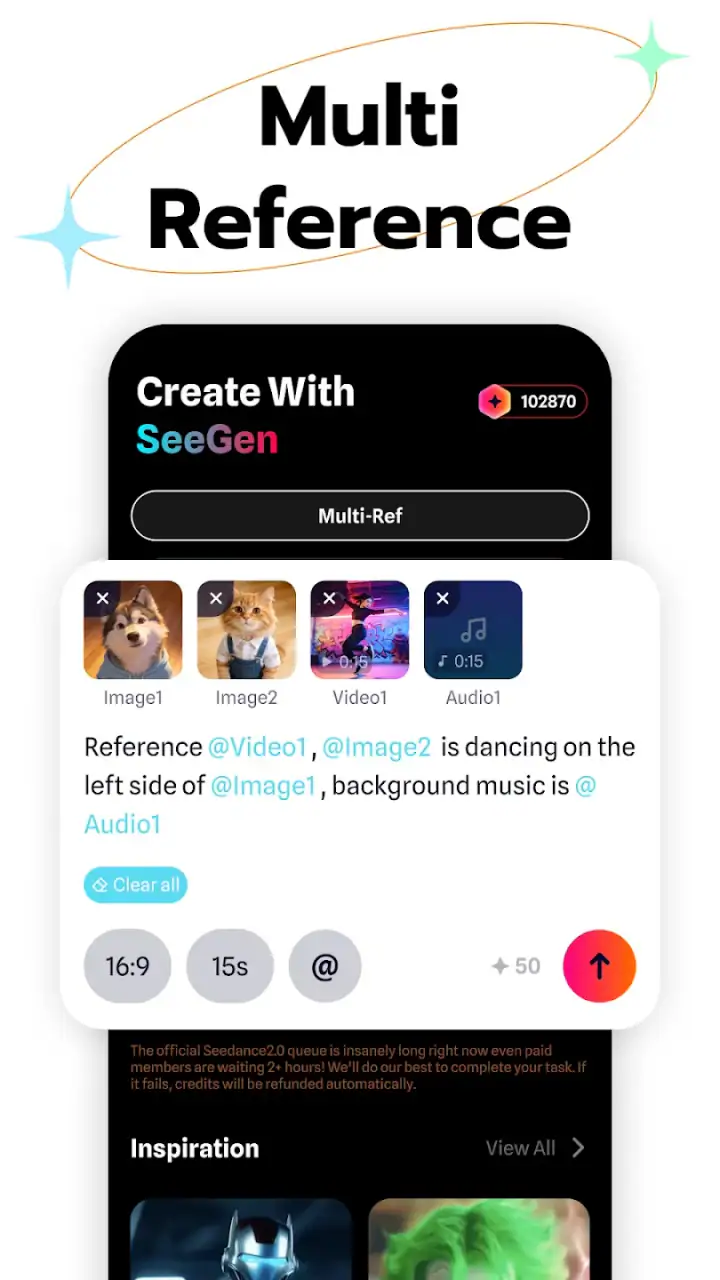
Device compatibility is another sensible first check. The app supports Android 7.0 and newer, but meeting the minimum operating-system requirement does not automatically mean every device will feel equally comfortable during an AI-heavy workflow. On an older phone, I would close unrelated apps, keep enough free storage for temporary work, and avoid judging responsiveness while several demanding tasks are running in the background. These are ordinary precautions, but they can prevent a device limitation from looking like a generation error.
It is also worth checking your connection before repeating a request. A weak or unstable network can make a task appear stuck, especially when the app needs to send instructions or receive generated material. I would switch to a reliable connection, wait briefly, and try the small test again before spending any optional purchase. Repeating the same request rapidly is rarely a useful troubleshooting method; it can leave you unsure which attempt actually completed.
Because the app is free to install but includes optional purchases, I would not spend money until the basic path is clear on my device. First confirm that you can open the app, prepare a simple request, understand the result screen, and recover from an unsuccessful attempt. Only then would I consider whether a paid item fits the project. The listed purchase range extends from $2.99 to $199.99 per item, which makes that pause especially important for anyone experimenting casually.
Recovering a project without starting from zero
When a result is nearly right, the best recovery method is usually refinement rather than a complete restart. I would preserve the parts that already work and describe the specific defect in plain language. If the subject is correct but the movement is wrong, focus on movement. If the atmosphere works but the framing does not, change the framing. This approach gives the next attempt a clear job instead of asking it to reinvent the whole scene.
A useful technique is to separate creative instructions from correction instructions. First write what the scene should contain. Then add a short, direct note about what must be avoided or corrected. I would not bury the key request inside a long paragraph of adjectives. The more important instruction should be easy to identify when you return to the prompt later, especially after several variations.
For a realistic everyday example, imagine I want a short clip for a small café’s social post. My first request might describe a cup of coffee on a wooden table, warm morning light, and a slow camera move. If the cup changes shape between results, I would keep the setting and movement but make the object description more consistent. If the lighting is good but the camera feels too dramatic, I would adjust only that motion. This workflow is slower than accepting the first output, but it produces a more understandable creative process.
If a generation appears incomplete, I would first record what happened rather than immediately deleting everything. Note the wording, the approximate stage where the issue occurred, and whether the app remained responsive. Then retry with a simpler request. If the simpler request works, the original problem may have been complexity or interpretation rather than a general app failure. If even the basic test does not behave normally, that is a stronger reason to restart the app, check the connection, and verify the device conditions.
I would also avoid changing the model choice and the creative brief simultaneously when both Seedance 2.0 and Seedance 2.5 are relevant to the workflow. Keeping one variable stable makes comparisons more useful. If you switch everything at once, you may get a different result without learning why. For anyone building a repeatable process, that small discipline is more valuable than endlessly chasing a supposedly perfect prompt.
When the problem is outside SeeGen AI
Not every disappointing video indicates a defect in the app. The underlying model’s interpretation, the clarity of the request, the complexity of the scene, and the limitations of AI-generated motion can all affect the result. A person walking through a simple room is a more manageable test than a crowded street with several interacting people, readable text, changing reflections, and a complicated camera move. I would judge SeeGen AI using tasks that match the kind of work it is designed to support.
It is also important to distinguish a creative mismatch from a technical failure. A technically completed clip that has the wrong mood is not the same as an upload that never finishes. The first calls for prompt refinement and a more controlled brief. The second calls for basic troubleshooting. Treating both as the same problem leads to wasted attempts and unnecessary frustration.
Traditional video editors remain better for precise finishing. If I need exact cuts on a timeline, reliable audio placement, manual color adjustments, captions, or frame-by-frame control, I would use a dedicated editor after generating the visual material. SeeGen AI can fit earlier in that process, where I am exploring an idea or creating a starting clip. It is less convincing as a replacement for every tool in a complete production workflow.
Likewise, people who need fully predictable branding should be cautious. AI generation can help with atmosphere and visual concepts, but a business that depends on exact logos, consistent product proportions, or repeatable character details may need manual design tools for the final version. I would use SeeGen AI to explore a concept, create a mood piece, or develop a visual direction, then move to a more controlled application when precision becomes the priority.
Privacy and account decisions deserve the same practical care as creative decisions. I would read the app’s current permission and purchase screens carefully before proceeding, particularly if I were using personal images or preparing commercial material. I would also keep original assets in a separate location rather than relying on one app as the only copy. That is good working practice for any creative application and makes recovery easier if a project needs to be rebuilt elsewhere.
Who will get the most from it
SeeGen AI makes the most sense for a curious creator who wants an approachable route into Seedance-based video ideas. It can suit someone making visual experiments, short social concepts, mood clips, or early storyboards. The app’s Everyone content rating also makes it broadly approachable from an age-classification standpoint, although younger users should still have an adult handle purchase decisions and account access.
I can also see value for a small business owner who needs several visual directions before choosing one. Instead of paying for a finished shoot just to test an idea, the owner could use a simple concept workflow to explore tone and movement, then decide which direction deserves more work. The important qualification is that the generated result should be treated as a draft or creative aid when exact commercial details matter.
It is less suitable for someone who dislikes iteration, needs a complete manual editor, or expects every request to produce a consistent result immediately. I would also skip it as my main tool if my work depended on detailed post-production controls rather than rapid visual exploration. In those cases, a conventional art-and-design app with established layers, timelines, and export controls would be a better foundation.
My practical verdict after using the workflow
The strongest way to use SeeGen AI is as a focused idea-to-video step, not as an all-purpose editing replacement. I like the fact that its purpose is clear: it is built around familiar AI video workflows for Seedance 2.0 and Seedance 2.5 users. That focus can make the app easier to approach than a crowded creative suite, especially when I have a visual idea and want to test it without building the entire scene manually.
Its main weakness is the same thing that makes AI video interesting: the result is not fully predictable. The app rewards careful prompts, small revisions, and realistic expectations. Users who take a few minutes to run a simple test, preserve useful wording, and change one variable at a time will have a much better experience than users who repeatedly press retry without tracking what changed.
SeeGen AI has a 4.0 average from over six hundred ratings, with more than forty written reviews and over fifty thousand installs. Those figures suggest a modest but real user base rather than a tool I would describe as universally established. I would read that as a reason to try it for a specific need, not as a reason to build an entire production pipeline around it immediately.
In the end, I would recommend it to a friend who already wants to explore Seedance video creation and is willing to refine ideas patiently. I would start with the free installation, test a simple scene, and delay any optional purchase until the workflow feels reliable on the particular device. If that process suits you, SeeGen AI can be a useful creative launchpad. If you need exact editing, guaranteed consistency, or a traditional timeline from the first step to the last, I would choose another tool and use this app only when experimentation is the goal.
FAQs for SeeGen AI: Seedance 2.0 & 2.5
What is SeeGen AI: Seedance 2.0 & 2.5 used for?
SeeGen AI: Seedance 2.0 & 2.5 is designed for creating AI-generated videos from text prompts, images, or other creative instructions. It can help users produce short visual clips, animated scenes, social media content, and experimental video concepts without requiring advanced editing skills. Results depend heavily on the prompt, source material, selected settings, and the current capabilities of the underlying AI model.
Is SeeGen AI: Seedance 2.0 & 2.5 free to use?
The app may allow users to explore its interface or create a limited number of generations at no cost, but advanced features, higher-quality exports, faster processing, or additional credits may require payment. Pricing and available plans can change, so users should check the in-app purchase screen and the official store listing before subscribing. Always review renewal terms and cancellation instructions.
Does SeeGen AI: Seedance 2.0 & 2.5 require an internet connection?
Yes, an active internet connection is generally required because video generation is processed through online servers rather than entirely on the phone. Processing time can vary according to the prompt, video length, resolution, server demand, and account limits. A stable Wi-Fi or mobile-data connection is recommended, particularly when uploading images or downloading generated videos.
Can users upload personal photos or use real people in generated videos?
The app may support image uploads or prompts involving recognizable people, but users should only upload content they own or have permission to use. Avoid creating misleading, impersonating, defamatory, or non-consensual content involving real individuals. Users should also review the app’s privacy policy to understand how uploaded files and generated content are stored, processed, or potentially used to improve the service.
Are videos created with SeeGen AI: Seedance 2.0 & 2.5 suitable for commercial use?
Commercial usage depends on the app’s current terms, the selected subscription, the source material, and the rights associated with the AI model or platform. Before using a generated video for advertising, monetized social media, client work, or branding, check the applicable license carefully. Users should also confirm that music, images, logos, characters, and faces included in the project are legally cleared.
Pros
- Generates polished AI videos from simple text or image prompts.
- Supports creative storytelling with cinematic visual styles.
- Useful for quickly producing social media and marketing content.
- Helps users experiment with ideas without advanced editing skills.
- Can speed up early concept development and visual prototyping.
Cons
- Output quality may vary noticeably between different prompts.
- AI-generated details can sometimes look unnatural or inconsistent.
- Advanced features may require a subscription or paid credits.
- Rendering longer or higher-quality videos can take considerable time.
- Results depend heavily on clear
- detailed prompt descriptions.


